
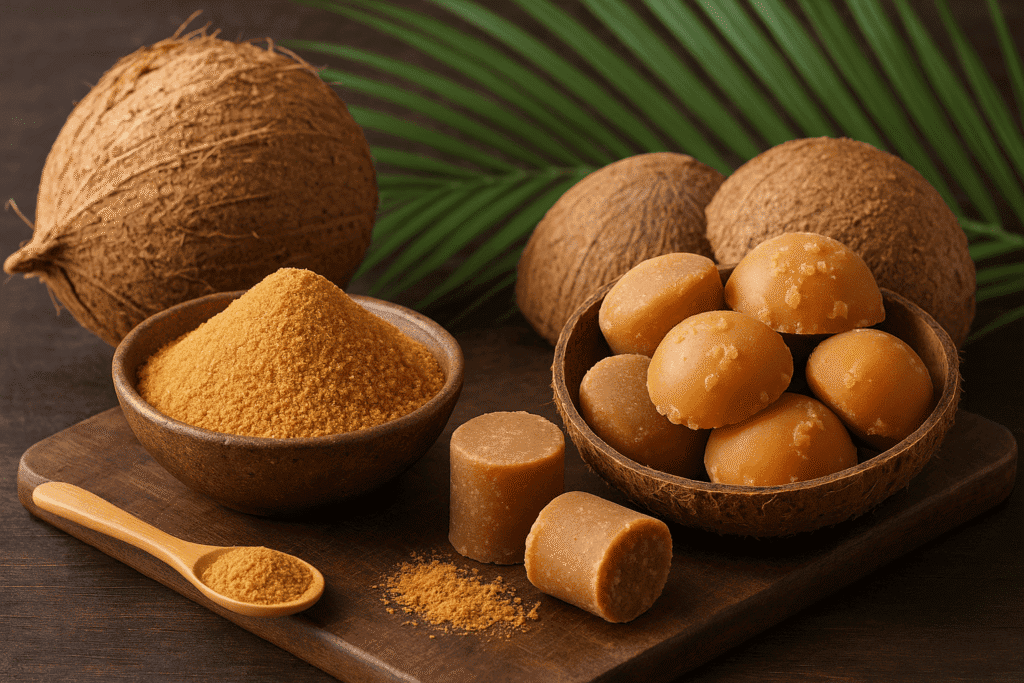
The popularity of organic coconut sugar as a healthier alternative to white sugar continues to rise. Thanks to its nutritional content and health benefits, it has become one of the top choices for a healthier lifestyle. However, many people often confuse it with brown sugar.
Although they share a similar color and appearance, organic coconut sugar and brown sugar are clearly different. Therefore, it’s important to understand the distinctions between the two. This article will help you recognize and differentiate them more easily.
1. Source and Production Process
Organic coconut sugar and brown sugar come from different sources. Organic coconut sugar is made from the nectar of coconut palm flowers. The nectar is collected and then boiled. As the liquid evaporates, it crystallizes into the granules we know as coconut sugar. This process is entirely natural with no artificial additives, which helps retain its original nutrients.
On the other hand, brown sugar comes from sugarcane extract, just like white sugar. The difference is that its production doesn’t include industrial additives, so it retains some vitamins and minerals.
2. Color of Each Sugar
Many people may be confused by the color of organic coconut sugar and brown sugar, as both have a brown hue. Organic coconut sugar is typically lighter brown, whereas brown sugar, as the name suggests, tends to have a reddish-brown color.
3. Taste
Although both are used as sweeteners, the taste of organic coconut sugar and brown sugar is slightly different. Organic coconut sugar is less sweet than white sugar but offers a subtle caramel-like flavor and a smooth finish. In contrast, brown sugar has a strong sweetness with a slight bitterness.
4. Usage
In terms of usage, brown sugar has a slight advantage. Its similarity to white sugar makes it more versatile for various recipes like cakes, bread, and more. Organic coconut sugar, however, is perfect for sweetening tea or coffee. But when it comes to choosing a healthier sugar alternative, organic coconut sugar is the better option.
5. Nutritional Content
Thanks to their natural sources and production processes, both organic coconut sugar and brown sugar contain beneficial nutrients for the body. They share some common minerals like calcium, iron, and magnesium. However, organic coconut sugar has some unique advantages.
One of the key nutrients in organic coconut sugar is inulin a dietary fiber that supports digestion. Inulin acts as a prebiotic, feeding the good bacteria in your gut.
6. Glycemic Index
When talking about sugar, glycemic index (GI) is a crucial point. It relates to the health effects of consuming sweeteners. The glycemic index measures how carbohydrate-containing food affects blood sugar levels.
Organic coconut sugar has a relatively low GI of 35, which is significantly lower than brown sugar, which has a GI of 64. This means that organic coconut sugar causes a smaller spike in blood sugar levels compared to brown sugar.
